Showing posts with label Basics 101. Show all posts

Monday, September 22, 2025

Why It's So Hard for 6 Meters to Open?


⚡ Why It's So Hard for 6 Meters to Open

The 6-meter band (50–54 MHz) sits in a unique spot between HF and VHF, and its propagation depends heavily on specific atmospheric conditions:

  • Sporadic E Propagation: This is the most common mode that opens up 6 meters. It occurs when patches of intense ionization form in the E layer of the ionosphere. These patches are unpredictable and short-lived, often appearing in late spring and early summer.

  • F2 Layer Propagation: Much rarer, this occurs during solar maximum years when the F2 layer becomes ionized enough to reflect 6-meter signals. This can allow for intercontinental DX—but it’s a treat that only comes around every 11 years or so.

  • Tropospheric Ducting & Meteor Scatter: These are more niche modes. Tropospheric ducting can extend VHF signals over long distances, especially near coastal areas. Meteor scatter uses ionized trails from meteors to bounce signals briefly.

  • Geomagnetic Storms & Solar Activity: These can either help or hinder propagation. A strong CME (coronal mass ejection) might supercharge the ionosphere—or completely shut it down.

๐ŸŒž When to Watch for Openings

  • Late Spring to Early Summer: Prime time for Sporadic E.
  • Solar Maximum Years: Watch for F2 openings.
  • Meteor Showers: Great for short bursts of activity.
  • Contests & Weekends: More operators on the air means more chances to catch an opening.

๐Ÿงญ Tips to Catch the Magic

  • Monitor PSKreporter or DXMaps for real-time propagation reports.
  • Use beacons to check if the band is open.
  • Try FT8 mode—it’s sensitive enough to detect weak signals others might miss.
  • Keep your antenna high and clear of obstructions.

When it opens, it’s like the band comes alive with voices from hundreds or thousands of miles away. That’s why hams love it—it’s a challenge, but the payoff is pure joy.

Friday, July 25, 2025

What are Ferrite Beads?


๐Ÿงฒ In ham radio, ferrite beads are small but mighty components used to suppress unwanted radio frequency interference (RFI). They’re made from ferrite—a type of magnetic ceramic—and are typically slipped over cables or wires to block high-frequency noise without affecting the desired signals.

๐Ÿ“ก What They Do

  • Suppress common mode currents: These are unwanted currents that travel along the outer surface of coaxial cables or power lines, often causing interference.
  • Act as RF chokes: By adding impedance to high-frequency signals, ferrite beads help prevent those signals from radiating or being picked up by nearby electronics.
  • Improve signal clarity: Especially useful in noisy environments, they reduce hums, buzzes, and other interference that can degrade transmission or reception.

๐Ÿ”ง Where You’ll See Them

  • On coaxial cables near antenna feed points
  • Around power cords, USB cables, and audio lines in the shack
  • Inside baluns and line isolators to clean up signal paths

๐Ÿงช Choosing the Right Mix

Ferrite beads come in different "mixes" optimized for specific frequency ranges: | Mix Type | Best Frequency Range | Common Use | |----------|----------------------|------------| | Mix 31 | 1–300 MHz | HF suppression | | Mix 43 | 25–300 MHz | General RFI filtering | | Mix 61 | 200–2000 MHz | VHF/UHF applications | | Mix 77 | 0.1–50 MHz | AM broadcast suppression |

What is a transistor?

 A transistor is a tiny but mighty component that’s basically the backbone of modern electronics. It’s a semiconductor device that can amplify or switch electrical signals—kind of like a gatekeeper for current.

⚙️ How It Works

A transistor has three terminals:

  • Emitter: Where current flows out
  • Base: The control terminal
  • Collector: Where current flows in

When a small current or voltage is applied to the base, it controls a much larger current between the collector and emitter. That’s how it can act as:

  • ๐Ÿ”Š An amplifier: Boosting weak signals (like turning a whisper into a shout)
  • ๐Ÿ” A switch: Turning current on or off (like a digital light switch)

๐Ÿงช Types of Transistors

There are two main types:

  • Bipolar Junction Transistor (BJT): Controlled by current
  • Field-Effect Transistor (FET): Controlled by voltage

Each has subtypes like NPN, PNP, MOSFET, and JFET, depending on how they’re built and used.

๐Ÿง  Why They Matter

Transistors are used in:

  • Computers (billions of them in your CPU!)
  • Audio amplifiers
  • Power supplies
  • Radios and TVs
  • Smartphones
  • Electric vehicles
  • Space tech

Without transistors, we wouldn’t have microprocessors, digital logic, or even the internet as we know it. They’re the unsung heroes behind every beep, buzz, and byte.

Thursday, October 10, 2024

What do Capacitors do?

Capacitance is the amount of charge that can be stored at a given voltage by an electrical component called a capacitor.

Capacitors: Reservoirs for Electricity After resistors, capacitors are the second most common component in the average electronic device. Capacitors are interesting little gadgets. They store electrons by attracting them to a positive voltage. When the voltage is reduced or removed, the electrons move off. When a capacitor removes or adds electrons to the circuit in this fashion, it can work to smooth out voltage fluctuations. In some cases you can use capacitors combined with resistors as timers. 

Capacitors make possible all kinds of circuits, such as amplifiers and thousands of others. Capacitors are used for all sorts of neat applications, including Creating timers: A kind of electronic metronome, a timer most often pairs up with a resistor to control the speed of the tick-tick-tick. Smoothing out voltage: Power supplies that convert AC current to DC often use capacitors to help smooth out the voltage so that the voltage stays at a nice, constant level. Blocking DC current: 

When connected inline (in series) with a signal source, such as a microphone, capacitors block DC current but pass AC current. Most kinds of amplifiers use this function, for example. Adjusting frequency: You use capacitors to make simple filters that reject AC signals above or below some desired frequency. By adjusting the value of the capacitor, it’s possible for you to change the cut-off frequencies of the filter.

Thursday, September 19, 2024

What is RTTY?

Radio TeleTYpe (RTTY) is a method of sending digital messages between radios using tones. It's a digital mode used in ham radio that can be conversational, similar to technical conversation or rag chewing. 

Here are some things to know about RTTY: 

  • RTTY evolved from landline teleprinters in the mid-1800s. The US Navy successfully tested printing telegraphy between an airplane and ground radio station in 1922. 
  • RTTY can use several coding methods, such as Baudot, Amtor, and simple ASCII. 
  • Modulation: RTTY uses AFSK (audio frequency shift keying) or FSK (frequency shift keying) to transmit tones. 
  • Speeds: The most common RTTY speed is RTTY 45 (45.45 baud), but other speeds include 50 baud and 75 baud. 
  • The shift is usually 170 Hz, with the upper tone used for idle condition (MARK). 
  • Today, RTTY usually involves using a computer and modulation/demodulation software.

Wednesday, July 3, 2024

How to Use WSTJ-X: Master Class Video

This is not my video, this influencer is one of my favorite "ham radio how to" producers. This video is what to do after you have connected it to your radio. Check out his other other video's https://www.youtube.com/@hamradiotube


Tuesday, July 2, 2024

My Antenna: Wolf River Coil Silver Bullet Platinum


According to Wolf River Coils LLC "The Silver Bullet Platinum. Like our SB1000, will tune 80 thru 10 meters, but the Platinum will handle 100 watts digital, 300 watts CW and 500 watts SSB. This is the perfect coil for those running high power for the digital modes, or high speed CW. This coil has endured extensive testing as well as year-long beta testing with hams across the country with zero failures. The core is made of composite material that can handle excessive heat, unlike a PVC core. As with all our coils, the hardware and wire are all high-quality stainless steel, so rust and corrosion will never affect your coil. It will look as good years from now as the day you bought it. 
WRC Platinum 1000 
Our 80 thru 10 meters Platinum coil is priced for any ham who needs a higher power coil for running the digital modes whether it is FT8, RTTY or SSTV. 
The Platinum TIA comes with the Silver Bullet Platinum Coil, 24 inch Mega Pod tripod, 102 inch Collapsible Whip, and standard Radial Kit with three 33 foot radial wires."

With the Platinum Silver Bullet 1000 I am able to transmit data at 100 watts (though I turned the power down to 90w just to be safe.). As opposed to the non platinum Silver Bullet 1000 being limited to 20 watts.

The Mega Pod works well and is very stable. Yes if you are in "heavy" winds you would want to use guy wires or sandbags. 

Definitely recommend an Antenna Analyzer. It will make tuning an absolute breeze. I have been using this antenna for about 2 weeks as of the writing of this post. Mostly FT-8 and it performs spectacularly. 

The included instructions tell you how to tune in 6 meters. Though it is not advertised that way. Being a technician class amateur radio operator I do a lot with 6 meters. In 6 meters I can get the antenna's SWR down to about 1.42 to 1 with the coil then lower it a bit more with antenna length. 

First set your antenna height at 40 inches. Then adjust coil to the very top coil and turn until you get to 1.4 or less. Then adjust antenna height to dial it in even closer. That's my trick for 6 meters. 

Receive is great, I get far away stations from the Virgin Islands, Puerto Rico, Texas etc...

This antenna gets a 4.5 out of 5 from me. Great Equipment! Easy to use, don't need a tuner, multi band 80m-6m along with being very hardy and well made. Check them out! https://wolfrivercoils.com/

  • Silver Bullet 1000 (website) – 100 watts SSB, 50 watts CW, 20 watts digital
  • Platinum 1000 (website & instruction sheet) – 500 watts SSB, 300 watts CW, 100 watts digital


WSJT-X Dark mode!

 Originally posted by GM6NX @ https://gm6nx.com/wsjt-x-dark-mode/

WSTJ-X Dark Mode! 

Your right WSJT-X can hurt your eyes because of the white glare from the screen. Well this guide will show you how to turn WSJT-X into dark mode.

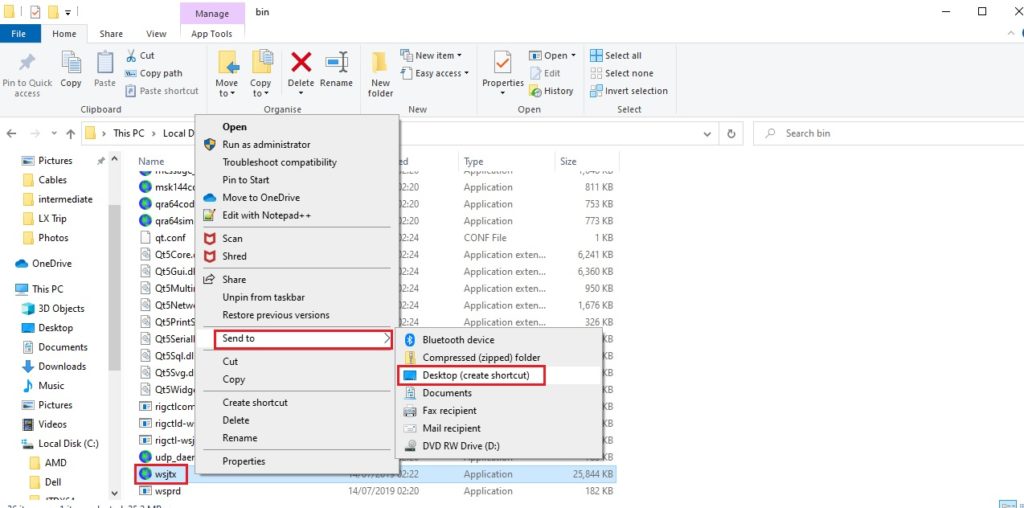
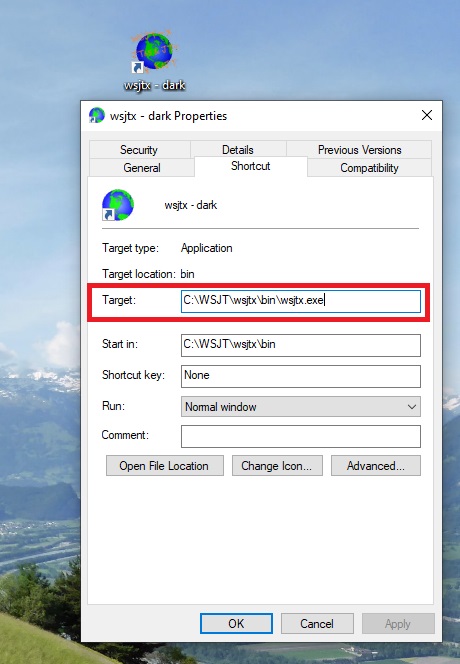
Step one – create a new short cut from the WSJT-X.exe file to your desktop. You will find this in the C: drive or what ever letter your hard drive is.

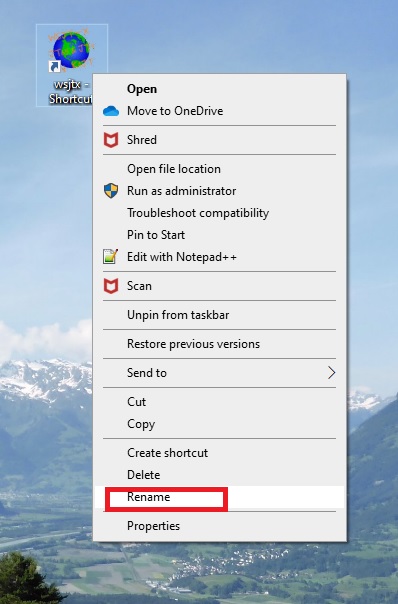
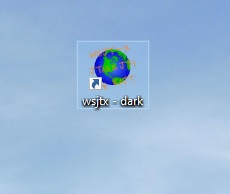
Step two – rename your short cut to something you will known that it is the dark mode version, I called mine “WSJT-X – DARK”

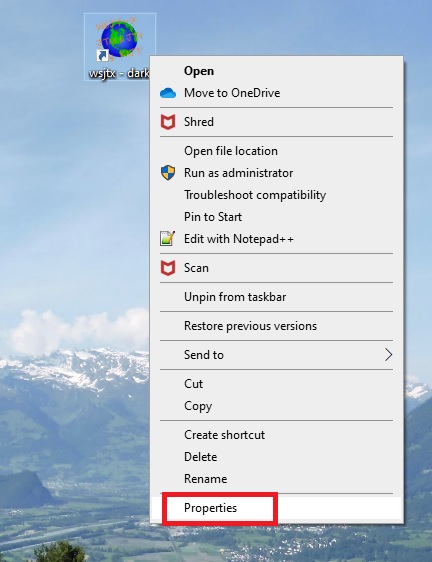
Step three – Right click on the short cut and select properties.

Step four -click in the target section

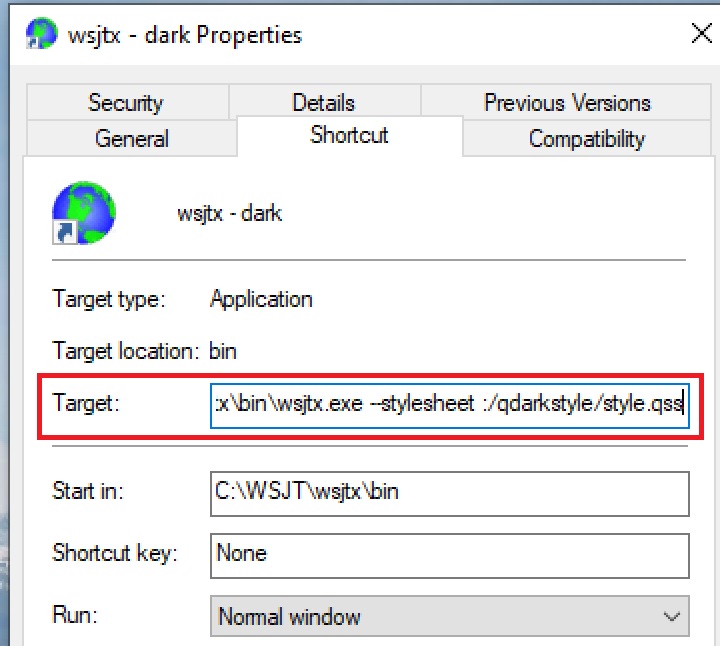
Step five – after the wsjtx.exe add the following

–stylesheet :/qdarkstyle/style.qss

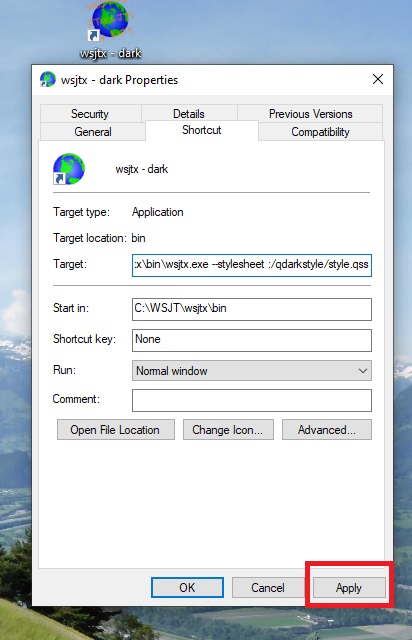
Step six – click apply then OK.

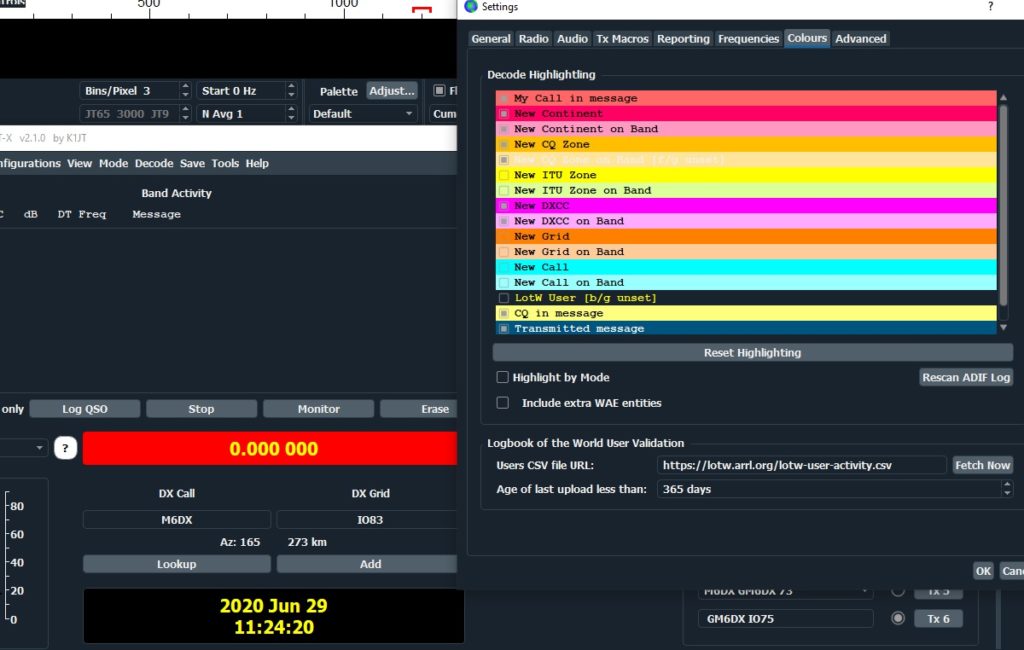
Step seven – click on your new short cut and open up WSJT-X – remember to change the colours to suit your own needs inside the wsjt-x program.

Any Questions?

Monday, June 10, 2024

How do I know if a band opens up?

First off! what is meant by a band opening up? Simply that the atmospheric conditions (solar flares, meteor scatter, tropospheric ducts, sporadic E layer density changes) and their effect have formed in a way that is conducive to bouncing and bending radio waves for extremely long distances. Thus opening up good communication between distant stations.

Tropospheric Ducting: As per Google.com AI "Ducting occurs when the refractive index of the atmosphere rapidly decreases with height, which leads to ray trajectories bending inward towards the surface of the Earth, effectively creating a waveguide and enabling long-distance communication. "Temperature and it's changes seem to be key in taking advantage of Tropospheric Ducting. Click this link to view the Tropospheric Ducting Forecaster. Additionally stated "Tropospheric ducting is when the atmosphere allows radio waves, including those used for high frequency transmission, to travel long distances due to temperature and humidity variations. It can extend your signal range but may also cause signal fluctuations and interference, depending on atmospheric conditions" 

Sporadic E: As per Google.com AI and Wikipedia.com "Sporadic E propagation reflects signals off relatively small ionization patches in the lower E region located at altitudes of about 95~120 km (50~75 miles)." and  "Sporadic E Layer refers to a mesospheric phenomenon characterized by the occurrence of temporary enhancements in the density of the E layer of the Earth's ionosphere. These enhancements are observed to last from a few minutes to several hours and are associated with specific latitudes and times of day." 

How do we know or predict these conditions?  HF Propagation and Terrestrial Data Website offers extensive data on RF conditions.  The data is available as a widget for Windows or your website. You can look up band availability anytime. Was weeks before I realized one could simply look up the propagation conditions as opposed to trial and error. 

Please see banner below. That is the real time status and condition of band propagation data.